IELTS Writing Task 2 in 40 Minutes: A Minute-by-Minute Plan

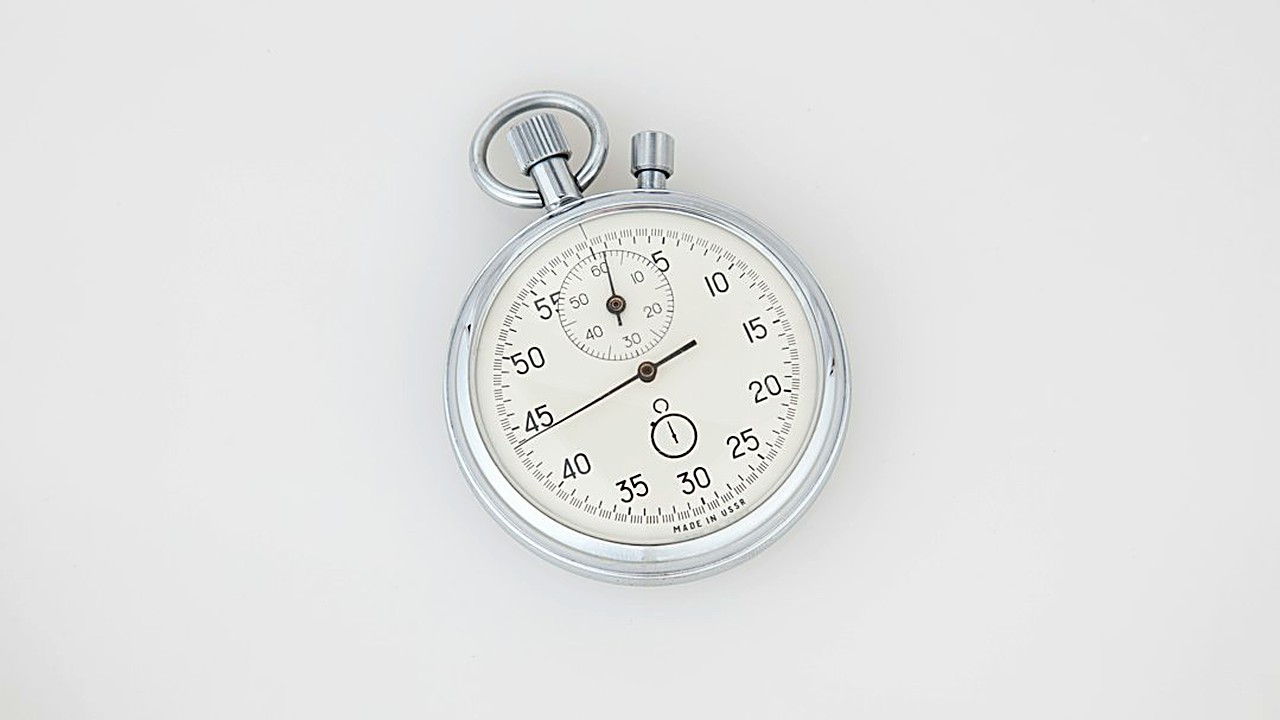
Quick answer: Give Task 2 a full 40 minutes and split it into blocks: about 5 minutes to plan, 30 minutes to write four paragraphs, and 5 minutes to check. Do Task 2 first if you tend to run out of time, because it is worth twice as much as Task 1.↗ Share on X
The simplest way to manage time in IELTS Writing Task 2 is to give it 40 full minutes and split them into three blocks: 5 minutes to plan, 30 minutes to write, and 5 minutes to check. Inside the 30 writing minutes, each paragraph gets its own small deadline. If you often run out of time, write Task 2 first, because it is worth twice as much as Task 1.
That is the whole answer. The rest of this article shows you how to make that plan work under pressure, what to do when you fall behind, and how to practice so the timing becomes automatic.
Why is 40 minutes the right amount for Task 2?
 Master IELTS Conditionals for Band 8 Speaking →
 IELTS Speaking Part 1: A 3-Step Formula for Longer Answers →
 IELTS Writing Task 2: Complex Sentences for Band 8 →
The IELTS Writing test lasts 60 minutes for two tasks. Task 1 asks for at least 150 words. Task 2 asks for at least 250 words. Task 2 also counts for more of your Writing score — roughly twice as much as Task 1.
So the math is simple:
- More words needed in Task 2
- More marks at stake in Task 2
- Therefore, more time for Task 2: about 40 minutes, leaving 20 for Task 1
The test does not stop you between tasks. Nobody will tell you "move on now." You must control the clock yourself. That is why a fixed plan matters more than a fast pen.
Level up — free guides in your inbox
What does the minute-by-minute plan look like?
Here is a plan for a standard four-paragraph essay: introduction, two body paragraphs, conclusion. Write the times on your question paper before you start, based on the clock in the room (or the timer on screen if you take the computer test).
| Minutes | Block | What you do | Target words |
|---|---|---|---|
| 0–5 | Plan | Read the question twice, pick your position, note 2 main ideas with 1 example each | — |
| 5–10 | Introduction | Paraphrase the question, state your opinion or outline | 40–50 |
| 10–21 | Body paragraph 1 | Main idea, explanation, example | 90–100 |
| 21–32 | Body paragraph 2 | Second idea, explanation, example | 90–100 |
| 32–35 | Conclusion | Restate your position in new words, sum up both ideas | 30–40 |
| 35–40 | Check | Fix grammar, spelling, missing words, check you answered every part | — |
Total: about 260 to 290 words. That is above the minimum without wasting time.
Notice that the plan gives each body paragraph about 11 minutes. Body paragraphs carry most of your ideas, so they get most of the time.
How do you plan in only 5 minutes?
 IELTS Writing Task 2: 5 Complex Sentence Patterns for Band 8 →
 IELTS Listening Section 4: 7 Ways to Catch Key Details →
 IELTS Task 1 Trends: A 3-Step Method With a Model Answer →
Many students skip planning because it feels like lost time. It is the opposite. A clear plan saves you from stopping in the middle of a paragraph to think "what do I say next?"
Use these five steps:
1. Underline the task words. Is it asking for your opinion? Both views? Advantages and disadvantages? A problem and a solution? Many low scores come from answering a different question than the one asked.
2. Check if there are two parts. Some questions ask two things, such as "Why is this happening? What can be done?" You must answer both.
3. Choose your position in one sentence. Do not change it halfway through. A clear position, kept from start to finish, helps your Task Response score.
4. Write two main ideas. One for each body paragraph. Short notes, not sentences.
5. Add one example to each idea. A concrete example — a city, a type of job, a common situation — makes the paragraph easy to develop.
Your plan might look like this on paper:
- Q: Should governments pay for university? → Agree partly
- Idea 1: wider access → students from poor families, more doctors and engineers
- Idea 2: cost to taxpayers → only fund key subjects, loans for others
That is enough. It takes 3 to 5 minutes and gives you a map for the next 30.
What should you write in each paragraph?
Knowing the shape of each paragraph helps you write faster, because you are not inventing the structure each time.
Introduction (about 5 minutes):
- Sentence 1: paraphrase the question in your own words
- Sentence 2: give your opinion, or say what the essay will discuss
Do not write a long story or a general opening about "the modern world." Two or three clear sentences are enough.
Body paragraph (about 11 minutes each):
- Topic sentence: the main idea in one line
- Explanation: why or how this is true (2 sentences)
- Example: a specific case (1–2 sentences)
- Link back: how this supports your position (1 sentence)
Conclusion (about 3 minutes):
- Restate your position using different words
- Briefly mention your two main ideas
- Do not add new ideas here
How do you know if you are falling behind?
Use checkpoints. Look at the clock only at these moments, not every minute:
1. After the introduction: should be around minute 10
2. After body paragraph 1: should be around minute 21
3. After body paragraph 2: should be around minute 32
If you are more than 3 minutes late at any checkpoint, act right away:
- Late after the introduction: your plan was probably weak. Shorten body paragraph 1 to topic sentence, one explanation and the example.
- Late after body paragraph 1: make paragraph 2 shorter. Skip the extra explanation sentence.
- Late after body paragraph 2: write a two-sentence conclusion and use what remains to check.
The golden rule: never leave the essay without a conclusion. A short conclusion is much better than a missing one. An essay that stops in the middle looks unfinished to the examiner and affects how your organization is judged.
How do you check your essay in 5 minutes?
Checking is not rereading for pleasure. It is a hunt for the mistakes you make most often. Use a fixed order:
1. Did you answer every part of the question? Read the question again, then your topic sentences.
2. Subject–verb agreement: "people *are*," "the government *has*," "everyone *thinks*."
3. Articles: a, an, the. Check every singular countable noun.
4. Plurals: "many *countries*," "some *problems*."
5. Missing words: small words like "to," "of," "is" are easy to drop when writing fast.
6. Spelling of key words you repeat, especially words from the question.
If you know your personal weak point — for example, verb tenses — check that first. You will not catch everything in 5 minutes, so catch the mistakes that repeat.
Should you count your words?
On the paper test, do not count every word. It wastes minutes. Instead, learn your handwriting average before the test:
1. Write a full line in your normal handwriting on the type of lined paper you will use.
2. Count the words in 5 lines and find the average per line.
3. Divide 250 by that number. That is the minimum number of lines you need.
Example: if you write about 10 words per line, you need at least 25 lines. Aim for 27 to 30.
On the computer test, a word counter appears on screen, so you just glance at it.
Is it better to start with Task 2?
There is no single right answer, but here is a simple way to decide:
| If this sounds like you | Start with |
|---|---|
| You often run out of time at the end | Task 2 |
| You feel nervous and need a quick "warm-up" | Task 1 |
| Your Task 1 is fast and reliable (under 20 minutes) | Either |
| You have ever left Task 2 unfinished in practice | Task 2 |
If you start with Task 2, set a firm stop at minute 40 even if you want to keep polishing. Task 1 still needs its 20 minutes and 150 words.
How do you train the timing before test day?
Timing is a habit, and habits come from repetition. Here is a simple two-week routine:
1. Days 1–3: Practice planning only. Take a Task 2 question and write a plan in 5 minutes. Do 3 a day. No essay.
2. Days 4–6: Write single body paragraphs in 11 minutes each. Use a timer.
3. Days 7–10: Write full essays in 40 minutes, using the checkpoint times written on top of the page.
4. Days 11–14: Do the full 60-minute test: Task 1 and Task 2 together, in the order you chose.
After each full essay, note two things: where you lost time, and the three mistakes you found while checking. After a week, you will see a pattern. That pattern tells you what to fix.
What are the most common timing mistakes?
- Writing a long introduction. Some students spend 10 minutes on it. Keep it to two or three sentences.
- Changing your opinion mid-essay. This forces you to rewrite and confuses the reader.
- Memorized templates that do not fit. Long memorized phrases take time and examiners recognize them. Short, natural linking words work better.
- Erasing too much. On paper, one neat line through a mistake is fine. Do not erase whole sentences.
- Writing 400 words. More words do not mean a higher score. They mean less time for checking.
Your next step
Today, take one Task 2 question and write the checkpoint times — 10, 21, 32, 35 — at the top of a sheet of paper. Set a 40-minute timer and write the essay without stopping the clock. When the timer rings, mark exactly where you were. Do this three times this week. By the third try, you will know whether your plan, your body paragraphs or your checking is the part that needs work — and you can practice that part directly.
FAQ
Should I do IELTS Writing Task 2 before Task 1?
You can. The test gives you 60 minutes for both tasks and lets you choose the order. Many students start with Task 2 because it carries more weight. If you do, set a hard stop at 40 minutes so Task 1 still gets 20.
How many words should I write in Task 2?
The minimum is 250 words. Aim for about 270 to 300. Going far beyond that uses time you need for checking and usually adds more mistakes, not more marks.
What happens if I do not finish my conclusion?
An essay without a conclusion usually scores lower on Task Response and on Coherence and Cohesion. Even two short sentences that restate your position are much better than nothing, so always protect the last few minutes.